South Africa: more than 90% of cattle herd vaccinated against foot-and-mouth disease
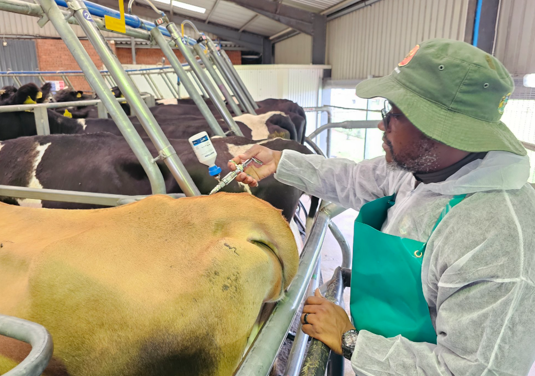
More than 90% of South Africa's cattle herd is now vaccinated against foot-and-mouth disease: just under 11 million by the State, nearly 4 million by the private sector — for more than 22 million doses purchased and distributed, according to SAnews. Minister of Agriculture Willie Aucamp announced this on Friday at the Agricultural Writers SA National Awards in Muldersdrift. “Reaching 90% before the end-of-December deadline is a major achievement for the agricultural sector,” he said, welcoming the “positive results” obtained when “the government and the private sector join hands”. The government was targeting 80% of the herd “well before” the deadline set for the end of December 2026. All provinces have moved to booster doses to maintain immunity; online registration remains open to farmers who want to vaccinate their own animals, with delivery within 24 hours. “New outbreaks have fallen sharply,” the minister added. The stakes are direct: animal-health control of the herd determines access to red-meat export markets, which Willie Aucamp cites among the gains to be protected, as much as farmers' incomes. The campaign relies on co-production: the State buys and distributes the doses, and farmers take over for their own animals. This sharing speeds up implementation but shifts part of the immune coverage onto the discipline of farms: the booster phase, now generalised, requires recurrent ordering and injection that 24-hour delivery must secure. Sankofa marker — Producing a resource is not enough: its health quality must also be guaranteed and its outlets controlled. The South African State retains control over mass vaccination and doses, but it is in red-meat export markets that the real value of the national herd is measured.
SAnews.gov.za
A major health issue for South Africa
South Africa has taken a significant step in the fight against foot-and-mouth disease, a viral disease that affects cattle and can have disastrous consequences for the agricultural economy. More than 90% of the country's cattle herd has been vaccinated, representing a colossal effort by both the government and the private sector. Minister of Agriculture Willie Aucamp announced on Friday at the Agricultural Writers SA National Awards in Muldersdrift that “Reaching 90% before the end-of-December deadline is a major achievement for the agricultural sector”. This vaccination campaign has made it possible to distribute more than 22 million doses, with the private sector having vaccinated around 4 million cattle and the State just under 11 million. This co-production model, in which the State supplies the doses and farmers take care of their own herd, demonstrates a collaborative approach that could serve as a model for other sectors.
A target exceeded and encouraging results
The government was targeting 80% of the herd “well before” the deadline set for the end of December 2026. Reaching 90% before that deadline is a success that reflects the effectiveness of the efforts made. This not only protects animal health but also ensures the long-term viability of red-meat export markets, a crucial sector for the national economy. South Africa's provinces have moved quickly to the vaccination booster phase, which is essential to maintain animal immunity. This proactive strategy is reinforced by an online registration system that allows farmers to order vaccines with rapid delivery within 24 hours. Delivery within 24 hours must secure recurrent ordering and injection.
Momentum to maintain for the future
The fight against foot-and-mouth disease does not stop at initial vaccination. The booster phase is crucial to ensuring that immune protection is lasting. This requires discipline on farms, because each farmer must commit to following the vaccination schedule and complying with biosecurity measures. Minister Aucamp also stressed the importance of continued vigilance to prevent new outbreaks of the disease. The South African State retains control over mass vaccination and doses. Farmers are encouraged to register to obtain vaccines, enabling them to participate actively in protecting their herd. The stakes are direct: animal-health control of the herd determines access to red-meat export markets.
What this changes
For an African entrepreneur or investor, this progress in vaccinating South Africa's cattle herd means an opportunity to invest in an agricultural sector in the midst of transformation. In other words, animal-health control of the herd is a determining factor for access to export markets, which can increase farmers' incomes and, by extension, those of investors. Collaboration between the State and the private sector also paves the way for strategic partnerships that can strengthen the agricultural value chain. In short, mass vaccination against foot-and-mouth disease represents a significant advance for South Africa's agricultural sector, while laying the foundations for sustainable growth and better competitiveness on international markets.
Source: SAnews.gov.za
---
Translated from the French original : [Afrique du Sud : plus de 90 % du cheptel bovin vacciné contre la fièvre aphteuse](/article/e000043c-5160-44e2-9dca-b2c668ebb070)
Source : SAnews.gov.za
Lire l'article original ↗