South Africa: eThekwini launches a three-year pilot programme for cannabis and hemp
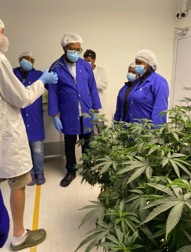
eThekwini municipality (Durban) is rolling out a three-year pilot programme to integrate local cannabis and hemp producers into a formal commercial value chain, as part of its Agri-Business Master Plan and with international seed company Royal Queen Seeds (RQS), according to SAnews.gov.za. Cannabis is one of five priority agricultural value chains selected by the City, alongside vegetables, poultry, pigs and sheep. Municipal officials and RQS representatives visited four sites: the RQS Experience Centre in Bluff, uMthombomuhle in Cliffdale for the situation of legacy growers, The Health Company’s medical facility in uMkhomazi and Dube TradePort for tissue culture, cloning and the seed gene bank. The City wants to provide emerging producers with quality genetics, technical training and regulatory support; it says it is working with the Department of Agriculture, the Department of Health, the Department of Trade, Industry and Competition, the South African Health Products Regulatory Authority and the Justice, Crime Prevention and Security Cluster to streamline regulation. The challenge: move legacy growers into the declared economy and attract capital into a sector whose national rules are still being built. Sankofa marker — Controlling land and local rules is not enough if genetics and seeds come from elsewhere: a piece of sovereignty is not sovereignty. Value is captured across the entire chain, from seed to finished product.
SAnews.gov.za
A pilot programme for cannabis in eThekwini
eThekwini municipality (Durban) is rolling out a three-year pilot programme to integrate local cannabis and hemp producers into a formal commercial value chain, as part of its Agri-Business Master Plan and with international seed company Royal Queen Seeds (RQS). Cannabis is one of five priority agricultural value chains selected by the City, alongside vegetables, poultry, pigs and sheep. The challenge: move legacy growers into the declared economy and attract capital into a sector whose national rules are still being built. To this end, municipal officials and RQS representatives recently carried out visits to several sites, including the RQS Experience Centre in Bluff and other facilities dedicated to medical production and tissue culture.
Support for emerging producers
One of the main challenges of this programme is to provide emerging producers with quality genetics, technical training and regulatory support. The municipality says it is working with the Department of Agriculture, the Department of Health, the Department of Trade, Industry and Competition, the South African Health Products Regulatory Authority and the Justice, Crime Prevention and Security Cluster to streamline regulation. By offering a clear regulatory framework and technical support, eThekwini hopes to facilitate market access for these producers, who must navigate an environment that is still unstable. The visits carried out by municipal representatives also made it possible to assess the situation of legacy growers. At uMthombomuhle in Cliffdale, officials engaged with a local representative to assess the position of legacy growers and identify possible public-private sector interventions to help integrate them into the formal economy. This underlines the importance of uniting the efforts of the different actors to ensure a successful transition to a sustainable economic model.
A collaborative governance model
For the development of a compliant and globally competitive cannabis economy to be feasible, coordinated governance and collaboration between the different levels of government are essential. The municipality stated that it will continue to keep residents informed as the pilot programme progresses. By combining international expertise with local agricultural knowledge, eThekwini aims to position Durban as a hub for high-quality, standards-compliant cannabis production.
What this changes
For an African entrepreneur or investor, this pilot programme in eThekwini represents a significant opportunity in a sector that is rapidly emerging. By integrating local producers into a formal value chain, the municipality is creating an environment conducive to innovation and growth. In other words, this means that sector players can benefit from technical and regulatory support, which facilitates their access to larger markets and allows them to comply with international standards. For an SME, this can translate into better competitiveness and an increased capacity to attract financing to develop their activities in a field undergoing rapid change. Source: SAnews.gov.za
---
Translated from the French original : [Afrique du Sud : eThekwini engage un programme pilote de trois ans pour le cannabis et le chanvre](/article/4f053dab-2761-4871-ade8-aaa4dca7616a)
Source : SAnews.gov.za
Lire l'article original ↗