Africa Critical Minerals: How the Continent Aims to Turn Its Geological Wealth into a High-Value Industry
The global energy transition has made so-called "critical" minerals — cobalt, lithium, copper, manganese, rare earths — a major geostrategic issue. Africa, which holds a significant share of known global reserves, particularly in Democratic Republic of Congo, South Africa, and Zimbabwe, finds itself at the center of this resource race. According to African Business, the ABIS2026 summit will bring together participants to discuss how the continent can "reap dividends" from this windfall, shifting from raw extraction to local processing, regional integration, and investment. However, the source content, promotional in nature, cites no named speakers or precise numerical data to support the "trillion-dollar" potential mentioned in the title — an order of magnitude to be considered as a projection, not an established fact. The challenge is concrete for producer countries: capture more added value locally rather than exporting raw ore, create industrial jobs, and reduce dependency on commodity price cycles. Fundamentally, the success of this shift will depend on internal factors — mining governance, energy and logistics infrastructure, effective implementation of the AfCFTA for regional integration — combined with external factors: Sino-Western rivalry to secure supply chains, and global interest rates weighing on

Road Ahead
📖 Full article available in French → [Afrique Minerais Critiques : comment le continent veut transformer sa richesse géologique en industrie à forte valeur ajoutée](/article/a41be6a3-a733-401d-86f9-e8755dbcf8f5)
Source : African Business
Lire l'article original ↗À lire également
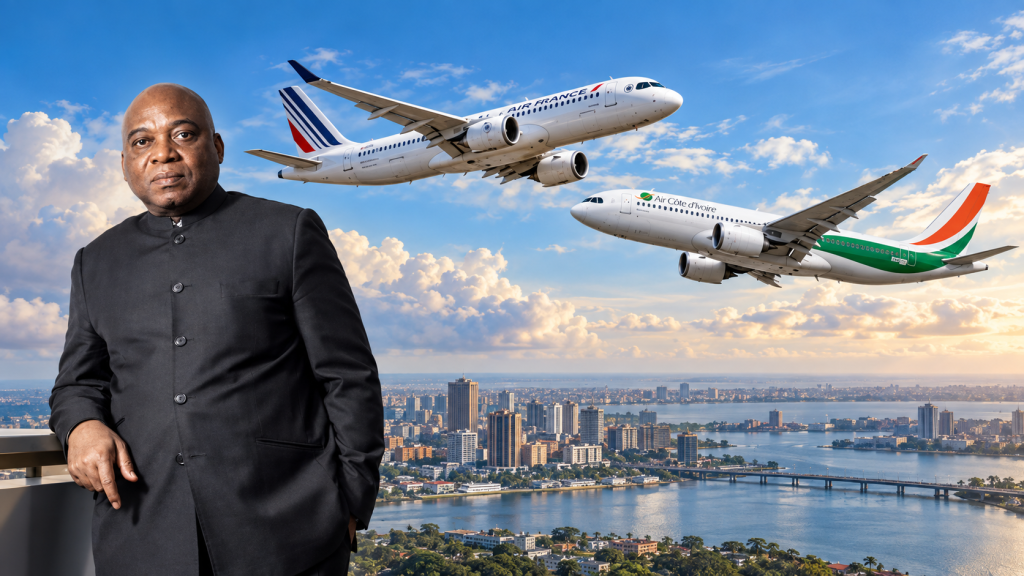
Côte d'Ivoire : Air France, actionnaire et concurrente d'Air Côte d'Ivoire, un paradoxe dénoncé par Ahoua Don Mello
Air Côte d'Ivoire a vu ses fréquences hebdomadaires sur la liaison Abidjan-Paris passer de sept à huit à compter du 29 mars 2026, contre 21 fréquences hebdomadaires cumulées…
Lire la suite
CEA : l'institution plaide pour une fiscalité des TIC mieux calibrée pour booster le numérique africain
La Commission économique pour l'Afrique (CEA) a réuni 144 participants issus de 46 pays, dont 34 pays africains et 12 pays d'autres régions, lors d'un atelier en ligne tenu le 17…
Lire la suite