Madagascar: AfDB estimates the country's financing needs at $7.27 billion annually by 2030
Madagascar must mobilize approximately $7.27 billion annually by 2030 to finance its development, accelerate economic growth, and support the structural transformation of its economy, according to the 2026 Annual Country Report by the African Development Bank (AfDB) Group, published on September 10. Produced annually by the pan-African institution for each of its regional member countries, this document serves as a reference framework to guide investment priorities and dialogue with Malagasy authorities and other donors. The report does not detail the precise sectoral breakdown of this funding across infrastructure, agriculture, energy, or education. This estimate comes for an economy of about 30 million inhabitants, marked by a historical reliance on subsistence agriculture, textiles, tourism, and mining, notably the nickel and cobalt from the Ambatovy site. Madagascar ranks among the poorest countries in sub-Saharan Africa and remains regularly exposed to cyclones, which undermine infrastructure and agricultural production every year. For the Malagasy state, this amount sets a resource mobilization target that far exceeds current national budgetary capacities and implies increased reliance on external financing, both public and private. For donors and investors, this figure signals the scale of the financing gap to be bridged by the end of the decade. This massive financing need reflects both internal vulnerabilities—recurrent political instability, a weak tax base, inadequate transport and energy infrastructure—and external constraints, notably the volatility of nickel prices, dependence on international aid, and the tightening of global financing conditions that makes access to capital markets more expensive for the most vulnerable economies.

Noah Grossenbacher
📖 Full article available in French → [Madagascar : la BAD chiffre à 7,27 milliards de dollars par an les besoins de financement du pays d'ici 2030](/article/7164c920-d30f-4d2e-b2fa-3c267e6cedd4)
Source : BAD — Banque africaine de développement
Lire l'article original ↗À lire également
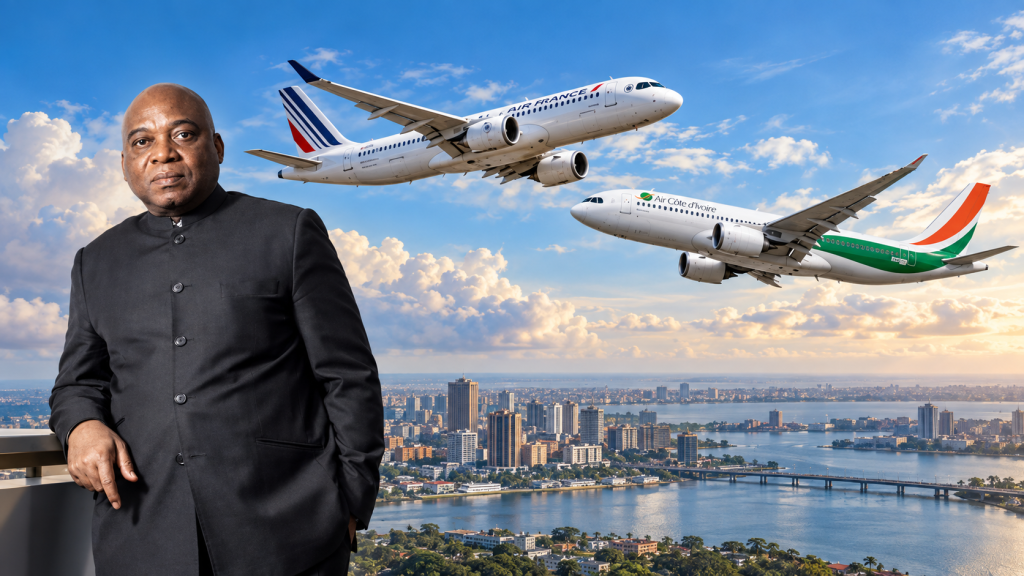
Côte d'Ivoire : Air France, actionnaire et concurrente d'Air Côte d'Ivoire, un paradoxe dénoncé par Ahoua Don Mello
Air Côte d'Ivoire a vu ses fréquences hebdomadaires sur la liaison Abidjan-Paris passer de sept à huit à compter du 29 mars 2026, contre 21 fréquences hebdomadaires cumulées…
Lire la suite
CEA : l'institution plaide pour une fiscalité des TIC mieux calibrée pour booster le numérique africain
La Commission économique pour l'Afrique (CEA) a réuni 144 participants issus de 46 pays, dont 34 pays africains et 12 pays d'autres régions, lors d'un atelier en ligne tenu le 17…
Lire la suite