Chad: Government plans end of live cattle exports by 2028
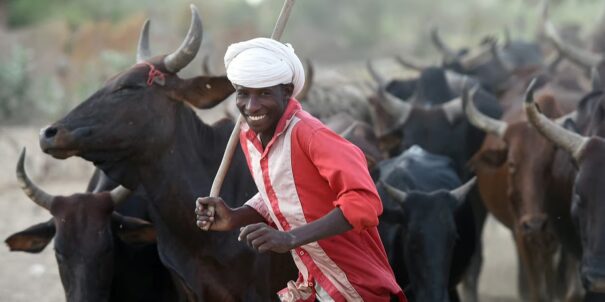
The announcement, reported by Financial Afric, indicates that Chadian authorities plan to end live cattle exports by 2028. Since the detailed content of the source article is reserved for subscribers, neither the precise figures, the modalities of the measure, nor official statements could be verified at this stage. Chad, a landlocked Sahelian country, derives a significant portion of its export revenue from livestock, a sector historically oriented towards the markets of Nigeria, Cameroon, and Libya. Such a decision, if confirmed, would be in line with a regional trend towards the local transformation of agricultural raw materials, already observed in other West African livestock-producing countries. For herders, live cattle exporters, and neighboring importing states, the stakes would be high: slaughter, conservation, and meat processing capacities would need to be developed upstream on Chadian territory, with investments and a timetable yet to be specified. In the absence of additional information on the planned mechanisms (progressive bans, quotas, incentives for local processing) and on the stakeholders consulted, it is impossible to assess the real feasibility of this 2028 objective or its quantified impacts on herders' incomes and regional trade.
📖 Full article available in French → [Tchad : le gouvernement programme la fin des exportations de bétail vivant pour 2028](/article/cd472878-f0d5-428a-8f63-30f33f36a84c)
Source : Financial Afrik
Lire l'article original ↗À lire également

Côte d'Ivoire : Air France, actionnaire et concurrente d'Air Côte d'Ivoire, un paradoxe dénoncé par Ahoua Don Mello
Air Côte d'Ivoire a vu ses fréquences hebdomadaires sur la liaison Abidjan-Paris passer de sept à huit à compter du 29 mars 2026, contre 21 fréquences hebdomadaires cumulées…
Lire la suite
CEA : l'institution plaide pour une fiscalité des TIC mieux calibrée pour booster le numérique africain
La Commission économique pour l'Afrique (CEA) a réuni 144 participants issus de 46 pays, dont 34 pays africains et 12 pays d'autres régions, lors d'un atelier en ligne tenu le 17…
Lire la suite