Senegal: The staggering plunge in foreign investment in 2025 raises questions
Since 2020, Senegal has ranked among the leading destinations for foreign direct investment (FDI) in West Africa, driven by the major Sangomar oil and Grand Tortue Ahmeyim (GTA) gas projects, which entered production in 2024. This momentum came to an abrupt halt in 2025, against a backdrop of political transition underway since the election of President Bassirou Diomaye Faye in March 2024. According to Prof. Amath Ndiaye (FASEG-UCAD), relaying data from UNCTAD's World Investment Report 2026, FDI evolved as follows: 1.846 billion dollars in 2020, 2.588 billion in 2021, 2.929 billion in 2022, a peak of 4.790 billion in 2023, then 3.319 billion in 2024, before plummeting to 337 million in 2025—a drop of over 89% in one year, described as a "spectacular reversal" that "raises concerns". This drop deprives the economy of a crucial source of external financing, as the country faces upwardly revised public debt since 2024 and tighter access to markets. Two hypotheses, pending further details: a mechanical end-of-cycle effect from major energy projects, which are less capital-intensive during the operational phase; or increased investor caution linked to the political and budgetary climate since 2024. Only a sectoral analysis could determine the cause.

Victor Rutka
📖 Full article available in French → [Sénégal : la chute vertigineuse des investissements étrangers en 2025 interroge](/article/b8880140-57f3-4548-9b33-5a0016d6d07c)
Source : Financial Afrik
Lire l'article original ↗À lire également
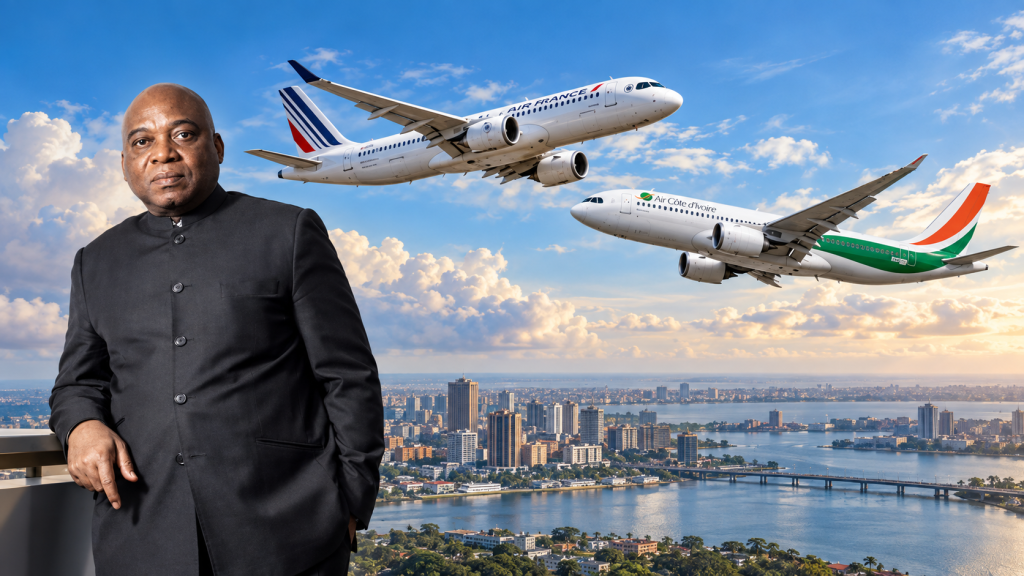
Côte d'Ivoire : Air France, actionnaire et concurrente d'Air Côte d'Ivoire, un paradoxe dénoncé par Ahoua Don Mello
Air Côte d'Ivoire a vu ses fréquences hebdomadaires sur la liaison Abidjan-Paris passer de sept à huit à compter du 29 mars 2026, contre 21 fréquences hebdomadaires cumulées…
Lire la suite
CEA : l'institution plaide pour une fiscalité des TIC mieux calibrée pour booster le numérique africain
La Commission économique pour l'Afrique (CEA) a réuni 144 participants issus de 46 pays, dont 34 pays africains et 12 pays d'autres régions, lors d'un atelier en ligne tenu le 17…
Lire la suite